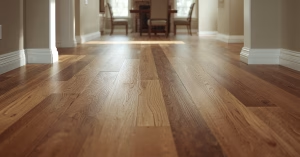
Known for relaxed homes, coastal styling and indoor-outdoor living, the Peninsula lifestyle can place unique demands on flooring throughout Mornington Peninsula homes.
Sand and grit are regularly carried inside, large windows expose floors to strong sunlight, and many modern homes are built on concrete slabs. These factors should all be considered when choosing the right timber flooring.
At Natural Wood Floors, we work with homeowners throughout the Mornington Peninsula to select, install and restore timber floors that suit the property, the subfloor and the way the household actually lives.
What should you consider when choosing flooring?
The best flooring choice is not based on colour alone.
Before selecting a product, it is important to consider:
- Whether the home is built on a concrete slab or timber subfloor
- The amount of sunlight entering the property
- Whether children or pets live in the home
- How often people move between indoor and outdoor areas
- The level of maintenance the homeowner is comfortable with
- Whether the floor may need to be sanded and refinished in the future
A floor that suits a quiet holiday home may not be the best option for a busy family residence with pets, children and regular entertaining.
Engineered timber flooring for modern Peninsula homes
Engineered timber is one of the most popular choices for modern Mornington Peninsula homes, particularly where flooring is being installed over a concrete slab.
It is made with a genuine timber surface layer over a stable, layered base. This construction gives engineered timber greater dimensional stability than traditional solid timber, making it well suited to many modern building conditions.
Engineered flooring is available in a wide range of timber species, colours, grades and board widths. European oak remains especially popular because it works well with light, neutral and coastal interiors.
Wider boards can help create a clean and contemporary appearance, while boards with more natural features and variation can give the home a warmer, more relaxed character.
It is important to understand that engineered construction does not automatically make the surface more resistant to scratching. Surface performance still depends on the timber species, coating, colour, texture and how the floor is maintained.
Solid timber flooring for long-term character
Solid timber remains an excellent option for homeowners who want a traditional floor with genuine depth and character.
Each board is made from solid hardwood and can generally be sanded and refinished multiple times over its lifespan. This allows the floor to be refreshed after years of wear or updated if the homeowner wants to change the colour or finish.
Australian species such as Tasmanian oak, blackbutt and spotted gum can work particularly well in homes where the owner wants a natural floor with more variation and character.
However, solid timber is not automatically the right option for every property. The subfloor, moisture conditions and installation method need to be assessed carefully before a recommendation is made.
In many slab-based homes, engineered timber may provide the more practical installation solution while still delivering the appearance and feel of a genuine timber floor.
Choose colours that work with coastal interiors
Many Mornington Peninsula homeowners prefer lighter and more natural timber colours.
Soft oak tones, warm neutrals and natural matte finishes work well with common coastal design elements such as:
- White or off-white walls
- Natural stone
- Linen and textured fabrics
- Light cabinetry
- Neutral furniture
- Large windows and open living areas
Lighter floors can help create a bright, open feel, while mid-tone timbers introduce more warmth and contrast.
Very dark floors can look impressive, but they may show dust, sand, pet hair and surface marks more readily. For a busy coastal home, a natural or mid-tone floor is often easier to live with.
A floor with some natural grain, texture and colour variation will also tend to disguise minor marks better than a very smooth and uniform surface.
Consider sunlight and natural colour change
Strong sunlight is common in Peninsula homes, particularly in properties with large windows, open-plan living areas and north- or west-facing rooms.
All genuine timber changes colour over time when exposed to natural and artificial light. Some species become warmer, while others may deepen, soften or become slightly more golden.
This is a natural characteristic of timber rather than a product fault.
Rugs and furniture can slow the colour change in covered areas, which may create visible differences when they are moved. Homeowners should occasionally reposition rugs and furniture where practical, particularly during the first year after installation.
Window furnishings and UV-filtering glass can also help reduce the intensity of direct sunlight, although they will not stop natural colour change completely.
Sand and grit can damage any timber floor
Coastal living often means sand and grit are carried into the home on shoes, feet and pets. Across the Mornington Peninsula, sandy soil can extend well beyond the immediate beachfront, so grit can be an issue even for homes several kilometres inland.
These particles can act like sandpaper underfoot and gradually scratch or dull the coating on a timber floor. No timber floor or coating is completely scratch-proof.
A few simple habits can make a significant difference:
- Place good-quality mats at external entrances
- Avoid wearing outdoor shoes inside where possible
- Vacuum or sweep regularly using a suitable hard-floor attachment
- Clean spills promptly
- Use protective pads under furniture
- Avoid dragging furniture or heavy objects across the floor
Regular removal of sand and grit is one of the most effective ways to protect the finish.
Matte and natural finishes are practical choices
Many homeowners prefer a low-sheen or extra-matte appearance because it creates a more natural look and works well with relaxed coastal interiors.
Matte finishes can also be more forgiving than high-gloss coatings, which tend to highlight dust, scratches and imperfections.
The coating still needs to suit the timber product, the installation method and the level of use within the home. A busy family household may require a different coating system from a lightly used holiday property.
The goal should be to find the right balance between appearance, durability and future maintenance.
Learn more about floor finishes here.
Flooring for pets and active families
Timber flooring can work very well in homes with children and pets, but expectations need to be realistic.
Dog claws, toys, furniture movement and everyday family life can all leave marks over time. This is part of living with a natural timber product.
Homeowners with pets may benefit from choosing:
- A matte or extra-matte finish
- A timber colour with natural variation
- A lightly textured surface
- A medium-toned floor rather than a very dark floor
- A product and coating system that can be maintained or refinished later
Keeping pets’ nails trimmed and cleaning grit from their paws can also help reduce scratching.
Learn more about floor maintenance and how to care for your floor here.
Do not overlook the subfloor
The condition of the subfloor is just as important as the flooring selected.
Before installation, the concrete slab or timber subfloor should be checked for moisture, flatness, movement and general condition.
Depending on the property, preparation may include:
- Grinding high areas
- Levelling low areas
- Sanding timber or particleboard subfloors
- Applying a suitable moisture barrier or primer
- Repairing movement or damaged sections
- Undercutting door jambs and adjusting surrounding finishes
Installing an expensive timber floor over a poorly prepared subfloor can lead to movement, hollow areas, uneven boards and other avoidable problems.
A proper site assessment allows these issues to be identified before installation begins.
Restoring existing timber floors
Not every Peninsula home needs a new floor.
Many older properties contain solid timber flooring that can be sanded and refinished. Even floors that appear heavily worn, scratched or discoloured may still have significant life remaining.
Restoration can remove the old coating, reduce many surface marks and allow the floor to be finished in a more modern colour and sheen.
Depending on the floor, homeowners may be able to move away from an older glossy or orange appearance and achieve a lighter, more natural finish.
Damaged sections can sometimes be repaired using reclaimed timber, although an exact match cannot always be guaranteed.
Which timber floor is best for your home?
There is no single flooring product that suits every Mornington Peninsula property.
Engineered timber is often an excellent choice for modern homes and concrete slabs. Solid timber can provide exceptional longevity and traditional character where the building conditions and installation method are suitable.
The right decision will depend on the home, the subfloor, the amount of sunlight, the expected level of wear and the appearance the homeowner wants to achieve.
Speak with a timber flooring specialist
At Natural Wood Floors, we supply, install, sand and restore genuine timber flooring throughout the Mornington Peninsula and surrounding areas.
We take the time to assess the property, understand how the household uses the space and explain the advantages and limitations of the available options.
Our goal is not simply to recommend the most expensive floor. It is to help each homeowner choose a timber floor that looks right, performs well and can be maintained for many years.
For expert advice on timber flooring for your Mornington Peninsula home, contact Natural Wood Floors or visit our Seaford showroom to explore the available colours, finishes and timber options.